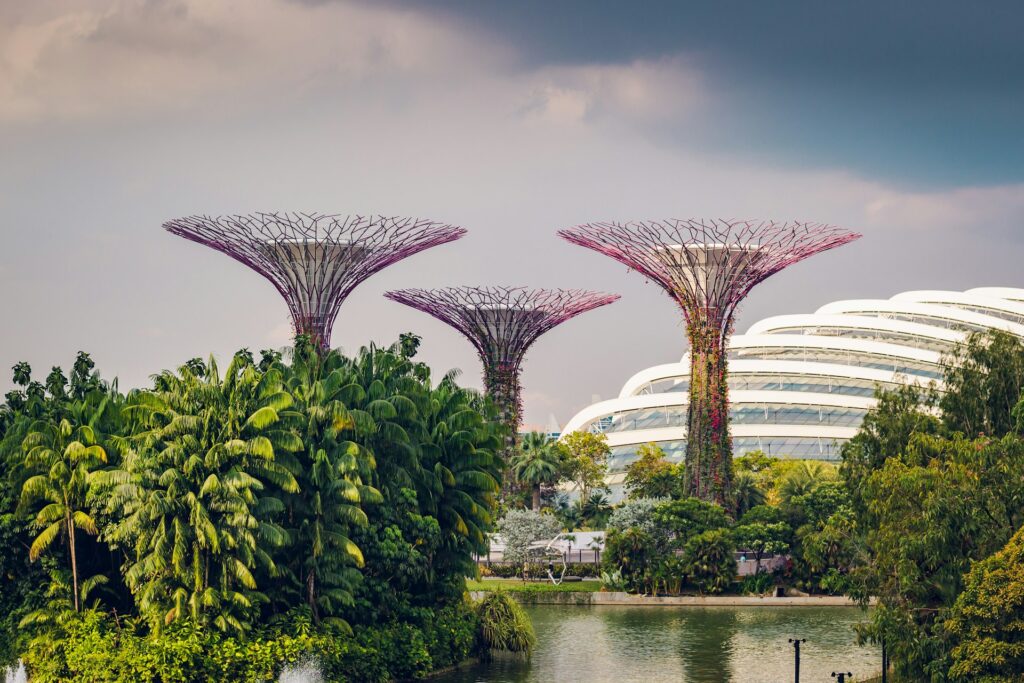
Emerging as one of the most pressing challenges in the modern world, climate change continues to impact every sector of society as governments of both developed and developing countries wrestle with how best to mitigate its effects. As a low-lying island city-state, Singapore is particularly vulnerable to the impacts of climate change, particularly rising sea levels and extreme weather events.[1]
First in our series of articles on climate change and the opportunities it presents here in Singapore, this article looks at some of the documents that have helped to frame the global climate change strategy before providing an overview of the Singapore Green Plan.
In subsequent articles, we intend to discuss the following topics:
- Key government-led projects for climate change adaptation and mitigation
- Exploring certain private sector opportunities
- Climate finance and sustainable finance
- Emerging issues in climate law and policy
The Kyoto Protocol and Paris Agreement
The Kyoto Protocol operationalises the United Nations Framework Convention on Climate Change (UNFCCC) by committing nations to limit and reduce greenhouse gas emissions according to agreed individual targets. An important aspect of the Protocol is the establishment of flexible market mechanisms based on the trade of emissions permits. Further, there is no requirement as to where the greenhouse gases are removed, which in turn stimulates green investments, especially in developing nations, allowing them to skip the use of older, less green technologies for newer, cleaner infrastructure.[2]
The Paris Agreement is a legally binding international treaty on climate change that was adopted by 196 parties at the UN Climate Change Conference (COP21) in December 2015 and came into force in November 2016.[3] Its fundamental goal is to hold “the increase in the global average temperature to well below 2°C above pre-industrial levels and pursuing efforts to limit the temperature increase to 1.5°C above pre-industrial levels, recognizing that this would significantly reduce the risks and impacts of climate change”.[4] Each nation submits climate action plans, known as Nationally Determined Contributions (NDCs), which set out the actions that will be undertaken to reduce greenhouse gas emissions and build resilience to adapt to the impacts of climate change. As the Agreement works in five-year cycles of increasingly ambitious climate action, each NDC is intended to be more ambitious than the previous iteration. Given the need to ensure that nations are cognisant of the overarching long-term goals of the Agreement, nations are also invited to submit LEDS, which provide a direction for the long-term planning and development of the nation’s climate action strategy.[5]
The Singapore Green Plan
Launched in February 2021, the Green Plan has five pillars: (1) City in Nature; (2) Energy Reset; (3) Sustainable Living; (4) Green Economy; and (5) Resilient Future.[6] It is important to view the Green Plan against the backdrop of the subsequent October 2022 announcement that, contingent on technological maturity and effective international cooperation, Singapore will raise its national climate target to achieve net zero emissions by 2050 as part of its Long-Term Low-Emissions Development Strategy. It will also reduce emissions to around 60 million tonnes of greenhouse gases (tCO2e) in 2030 after peaking emissions earlier as part of its 2030 Nationally Determined Contributions.[7]
While it may at first be tempting to think that the Green Plan’s pillars may not necessarily impact your business, we posit some ways in which we envisage that these pillars can affect businesses:
- Declining biodiversity can lead to disruptions in natural cycles and extreme weather events, which in turn affect migration and breeding, impacting food availability. Additionally, invasive species are more likely to move into new areas and lead to the introduction of new diseases.[8]
- As Singapore moves towards net zero by 2050, businesses will come under increasing scrutiny to utilise clean energy, which will at the very least involve added costs at the outset.
- As Singapore aims to be a zero-waste nation powered by a circular economy, businesses will need to identify ways to make water and waste management more efficient. This impacts businesses across numerous sectors, from F&B to manufacturing and packaging.[9]
- Manufacturing companies will have to increase the efficiency of their operations to reduce emissions, while the energy and chemicals sector will play a key role in Singapore’s decarbonisation journey through measures such as carbon capture, utilisation and storage.[10]
The pillars of the Green Plan also intersect with some of the 17 Sustainable Development Goals put forward by the United Nations, most notably:
- Affordable and clean energy
- Industry, innovation and infrastructure
- Sustainable cities and communities
- Responsible consumption and production
- Climate action
- Partnerships for the goals
We will now look at some key aspects of the pillars of which businesses should be cognisant, given the potential impact they will have, directly or otherwise.
Energy reset
As a city that receives a considerable amount of sunlight, solar energy is considered to be the most promising renewable energy source for Singapore and, at present, Singapore is one of the most solar-dense cities in the world. Current plans are to reach at least 2 gigawatt-peak of solar energy deployment by 2030 and build up energy storage systems to maintain grid reliability.[11] With a national hydrogen strategy announced in 2022, Singapore believes that low-carbon hydrogen has significant potential to be a major decarbonisation pathway.[12] With this strategy, Singapore will concentrate efforts on R&D, undertake long-term land and infrastructure planning and pursue international collaboration in this area. On a more granular level, there are potential opportunities in the hydrogen-to-power space, hydrogen import and storage, and the use of hydrogen as feedstock or fuel.[13]
Green economy
With targeted incentives aimed at helping local companies become more energy- and carbon-efficient, businesses in the manufacturing sector will be under the spotlight, given that the sector comprises approximately 21% of Singapore’s GDP while being the largest contributor to Singapore’s carbon emissions, at around 44% of total emissions in 2020.[14] Other opportunities within the green economy exist in the green finance, carbon trading and sustainable tourism sectors. There may also be grants or other support available to businesses.[15]
The global climate change framework and local context are important pillars that help businesses understand the impact climate change can have on their operations. If you would like to understand more about this space generally or have questions about certain aspects of it, whether it be the availability of grants or the sourcing of green energy, please contact any of the members of our team in Singapore, particularly Vincent Tan, Prashaanth Rajandran or Clarissa Wong.
References
- Ministry of Sustainability and the Environment: Climate Change
- UNFCCC: What is the Kyoto Protocol?
- UNFCCC: The Paris Agreement
- Article 2, paragraph 1(a), Paris Agreement text
- UNFCCC: The Paris Agreement
- Singapore Green Plan 2030: Overview
- National Climate Change Secretariat: Singapore and International Efforts
- Greenpeace UK: What are the effects of climate change on biodiversity?; The Royal Society: How does climate change affect biodiversity?
- Singapore Green Plan 2030: Sustainable Living
- Singapore Green Plan 2030: Green Economy
- Singapore Green Plan 2030: Energy Reset
- Ministry of Trade and Industry: Singapore’s National Hydrogen Strategy
- Ministry of Trade and Industry: Singapore’s National Hydrogen Strategy
- Ministry of Trade and Industry: Singapore’s National Hydrogen Strategy
- Singapore Green Plan 2030: Green Economy